
Mini Facelift
in Phoenix, AZ


Early signs of aging in the lower face can be subtle at first, then suddenly hard to ignore. If you are starting to notice early jowls, a softer jawline, mild sagging skin, or loose skin through the cheeks, a mini facelift can restore definition with a more targeted approach. For many Phoenix mini facelift patients, this facial rejuvenation procedure is a good way to treat early lower-face changes before they become more advanced.
A mini facelift is a surgical procedure that lifts and tightens the lower face to improve early signs of aging, such as mild jowls, sagging skin, skin laxity, and a less defined jawline. This mini facelift procedure is designed to refresh the lower third of the face with smaller incisions and a shorter recovery time than a full facelift.
A mini facelift, sometimes called a mini lift, is often chosen by younger patients or patients with earlier facial aging who don’t yet need the broader correction of a traditional facelift. While it is less extensive than some traditional facelift procedures, it is still a full surgical procedure and should be planned carefully by a facial specialist.


At Warrington Facial Plastic Surgery in Phoenix mini facelift treats the early structural changes that tend to show up in the lower face first. For many patients, that means moderate facial jowling, sagging skin near the jawline, mild loose skin through the lower cheeks, and a facial appearance that looks heavier or less defined than it used to.
A mini facelift can help improve:
Once facial tissues begin to shift downward, many patients find that non-surgical treatments no longer do enough. A mini facelift tightens and repositions the lower face in a way that better matches the real cause of the change.
With a mini facelift Phoenix patients can rejuvenate their lower face. It is most helpful in the lower third of the face, where early facial aging often changes the area around the jawline first. For some mini facelift patients, it may also create mild improvement in the neck area, though a neck lift may still be the better option when neck skin or banding is a bigger concern.

A mini facelift can improve a softer jawline and create a more defined jawline. This is one of the main reasons patients choose this facelift procedure. As tissues begin to drop, the clean line between the face and neck becomes less visible. Lifting and repositioning the lower face can restore that shape.
A mini facelift can improve mild sagging in the lower cheeks. This helps reduce the heavier look that develops as the remaining tissue begins to descend. The goal is to restore support and create a refreshed look.
A mini facelift is especially effective for early to moderate facial jowling. Jowls can interrupt the outline of the jawline and make the lower face look older or less structured. A mini facelift performed at the right time can smooth this area and improve contour before the changes become more advanced.
A mini facelift may improve the upper neck when changes are mild. If there is more loose skin, excess tissue, or visible banding in the neck area, Dr. Warrington may recommend combining the procedure with a neck lift. That decision is based on what will actually give you the best result, not simply the least extensive surgery.
The benefits of a mini facelift come from its focused approach. For the right candidate, it can mean a more defined jawline, less downtime, less scarring, and a quicker recovery than a full facelift.
Benefits may include:
For many Phoenix patients, a mini facelift offers a useful middle ground. It can do more than skin tightening alone, while avoiding the broader scope of a full facelift when the aging is still fairly early.

A good candidate for a mini facelift is usually someone with mild to moderate aging in the lower face who wants a natural-looking surgical result. Many mini facelift patients are starting to notice early signs of aging, including jowls, skin laxity, or a jawline that no longer looks as clean as it once did. They want visible improvement, but they do not need the level of correction used in some traditional facelift procedures.
You May Be a Good Candidate If…
A Mini Facelift May Not Be the Right Fit If…
Your initial consultation is where this becomes clear. Phoenix plastic surgeon, Dr. Warrington will examine the lower face, jawline, neck area, and skin quality to determine whether you are a candidate for a mini facelift or whether another facelift procedure would better match your goals.
Good preparation supports better healing and safer patient care. It also gives most patients a clearer sense of what recovery time will look like before the procedure even begins.
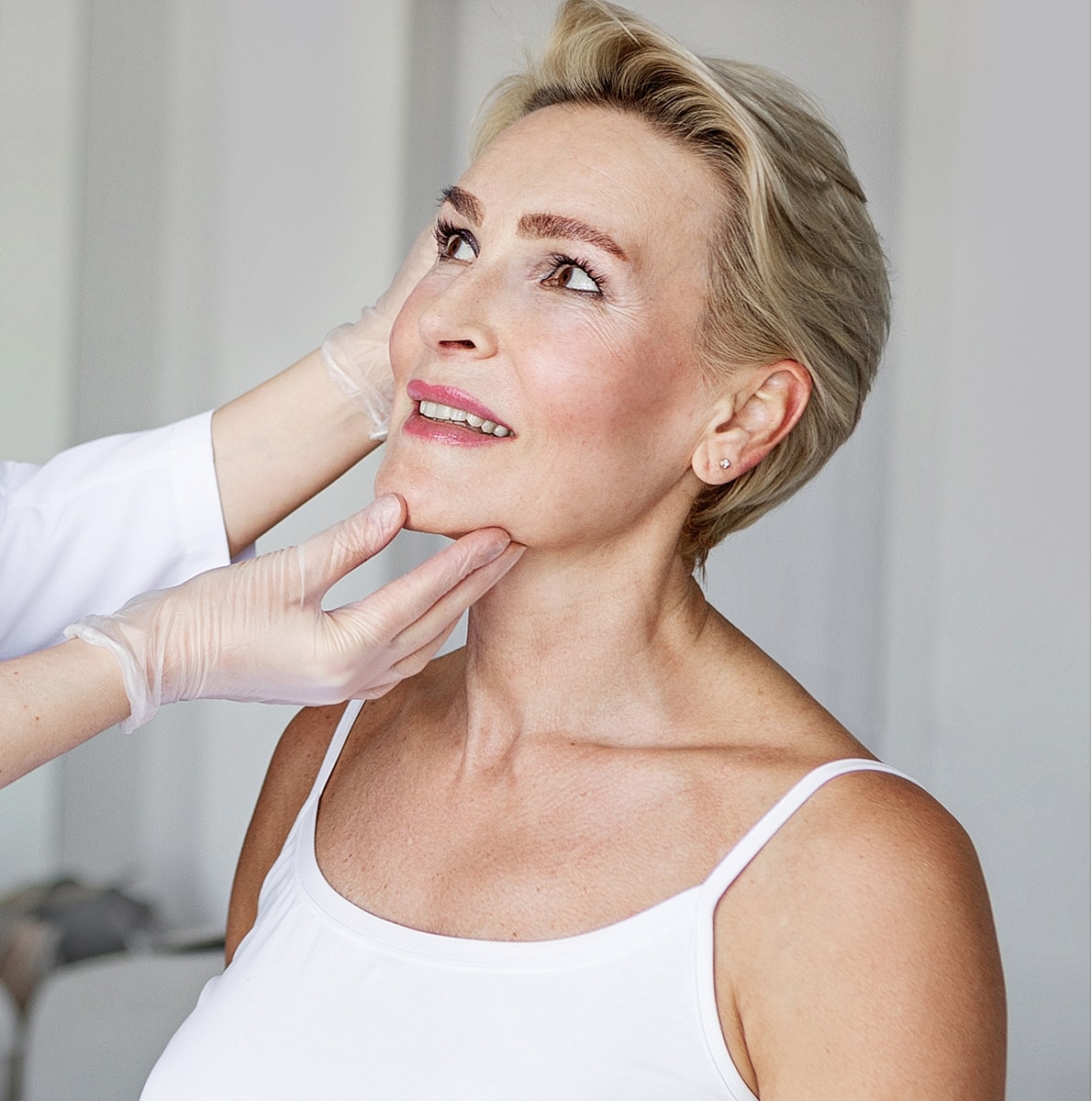
A mini facelift performed by a facial plastic surgeon is designed to lift the lower face through smaller incisions and more focused correction than a full facelift. While every surgical plan is different, the goal is usually the same: improve the jawline, reduce sagging skin, and reposition the deeper tissue without making the result look tight or overdone. The mini facelift procedure is usually performed in several steps:
Dr. Warrington studies the lower face, jawline, and neck area, then marks the skin based on where the descent is happening and how much correction is needed.
Depending on the surgical plan, mini facelift surgery may be performed with local anesthesia, sedation, or general anesthesia. The right choice depends on your comfort, your health history, and whether the procedure is combined with other facial cosmetic procedures.
Smaller incisions are placed around the ears so they can heal as discreetly as possible. One reason patients are drawn to a mini lift is that it often involves less scarring than more extensive surgery.
The deeper supporting tissue is repositioned to improve contour in the lower face. In some facelift surgery techniques, this includes tightening the underlying muscle layer or the tissue connected to it, rather than only tightening the skin.
If needed, excess skin or excess tissue is conservatively removed. The remaining tissue is then redraped in a way that looks smooth and natural.
The incisions are closed carefully, and you go home with aftercare instructions and a follow-up plan. This is where advanced surgical techniques matter. A mini facelift tightens the lower face best when it is planned precisely and performed with restraint. The goal is restoring support and shape in a way that fits your facial appearance.
Mini facelift incisions are shorter than those used in many traditional facelift procedures. They are usually placed around the natural contours of the ear so they are easier to conceal once healed. Smaller incisions can mean less scarring, but they still require careful healing and sun protection.
Mini facelift surgery may be done with local anesthesia or general anesthesia, depending on the details of the case. Safety always comes first. Dr. Warrington uses careful patient selection, detailed surgical planning, and close follow-up to support a smooth recovery and strong patient care from the first visit through healing.
Mini facelift recovery is usually easier than recovery after a full facelift, but it still takes planning. Most patients can expect swelling, bruising, tightness, and some soreness during the first week. For many mini facelift patients, the bigger question is not pain. It is when they can return to normal activities without looking obviously swollen or bruised.
Most patients need one to two weeks before they feel comfortable being out in public, returning to meetings, or attending events. Some patients feel ready in a week. Others need one to three weeks, depending on bruising, swelling, and how quickly swelling subsides.
Light walking is usually fine soon after surgery. More intense exercise, lifting, bending, and anything that raises blood pressure should wait until you are cleared. Pushing too early can slow facelift recovery and increase swelling.
Mini facelift recovery still requires patience. Even with less downtime and a quicker recovery than more extensive facelift surgery, healing is gradual.
Most patients start to see early mini facelift results within the first few weeks, but the lower face continues to settle beyond that point. It is common to see improvement early, then notice more refinement over time as swelling subsides and the tissues relax into place.
Stage | What To Expect |
|---|---|
| First Week | Too early to judge final results because swelling and bruising are still present |
| One To Two Weeks | The jawline starts to look cleaner as swelling subsides |
| Few Weeks | The lower face looks firmer, smoother, and more defined |
| Several Months | Final mini facelift results become more polished and natural |
Patients notice that the face looks less heavy and the jawline looks more structured. The goal is not a dramatic change. It is a cleaner, more rested facial appearance.
Mini facelift results can last for several years. The procedure does not stop future aging, but it can reset the lower face and create a firmer starting point. How long the result lasts depends on skin quality, sun exposure, weight changes, and how your face continues to age over time.
For many patients, the benefit is that they treat early signs of aging before they become more advanced. That is one reason younger patients do well with this procedure. They still have decent skin elasticity, and the correction needed is more focused.

Scars are a common concern before any facelift surgery. Most mini facelift patients want to know where the incisions will be, how long they will stay visible, and whether other people will notice them.
Mini facelift surgery usually uses smaller incisions placed around the ears, where they can be hidden within natural folds. Early scars may look pink or slightly firm. That part is normal. With time, most scars soften and become less noticeable.
Good healing depends on careful closure, proper aftercare, and keeping healing skin protected from the sun. Smaller incisions can help reduce visibility, but every patient heals a little differently.
A mini facelift is not the best option for every patient. It works best when the main issue is early aging in the lower face. If the neck area is more advanced, or if there is more sagging skin and excess skin than a mini lift can address, a full facelift or neck lift may be the better choice.
Option | Best For | Main Limit |
|---|---|---|
| Mini Facelift | Early jowls, mild skin laxity, softer jawline | Does not fully treat advanced aging or significant neck skin concerns |
| Full Facelift | More advanced lower-face and midface aging | More extensive surgery and longer facelift recovery |
| Traditional Facelift | Broader correction for more advanced facial aging | More recovery time than a mini facelift |
| Neck Lift | Loose neck skin, banding, or fullness in the neck area | Does not fully correct lower-face descent |
| Weekend Facelift | Marketing term sometimes used for limited-lift procedures | Meaning varies and may not clearly describe the actual surgery |
| Non-Surgical Treatments | Mild skin concerns or volume loss | Cannot lift deeper tissues like a surgical procedure |
This is why the initial consultation matters so much. A good plan is based on what is actually causing the change in your face, not just on choosing the least invasive option.
Yes. A mini facelift can be combined with other facial cosmetic procedures when that creates a more balanced result. Aging rarely happens in one exact spot, so combination treatment is common.
This is a common combination when the jawline and neck area are both starting to show age. A neck lift can address loose skin, banding, or fullness under the chin that a mini facelift alone may not fully correct.
Some patients combine a mini facelift with blepharoplasty to refresh both the upper and lower parts of the face. This can be helpful when the eyes and jawline are aging at the same time.
If the brow area also looks heavy, a brow lift may be part of a broader facial rejuvenation plan.
After healing, some patients add skin treatments or injectables to maintain their refreshed look. These treatments do not replace surgery, but they may help support overall facial appearance.
Choosing the right surgeon matters with any facelift procedure, but it is especially important in a smaller, more targeted operation where precision makes a visible difference. Dr. Stephanie Warrington is a fellowship-trained facial plastic surgeon and board-certified ENT who focuses on the face and neck. That focused background gives patients access to specialist-level care for mini facelift surgery in the Phoenix area.
At Warrington Facial Plastic Surgery, patient care is personal and direct. Dr. Warrington evaluates each patient herself, builds a personalized treatment plan, and recommends only the level of surgery that fits the anatomy in front of her. Her approach is thoughtful, balanced, and grounded in facial structure rather than overcorrection. For Phoenix mini facelift patients, that means expert care close to home.
If you are noticing early signs of aging in the lower face, including sagging skin, early jowls, or a softer jawline, a mini facelift may be the right next step. Schedule your private consultation with Dr. Stephanie Warrington to learn whether this procedure fits your goals and whether a mini facelift, full facelift, or neck lift would make the most sense for your facial appearance.
Call (602) 368-3223 or request an appointment online.
Mini facelift cost depends on the details of your surgical procedure, including anesthesia, facility fees, surgical time, and whether other facial cosmetic procedures are combined. You will receive exact pricing after your initial consultation and exam.
Mini facelift results can last for several years, though the exact timeline depends on your skin quality, age, lifestyle, and how your face continues to age over time. The procedure does not stop aging, but it can reset the lower face and keep the jawline looking firmer for much longer than non-surgical treatment.
A mini facelift treats earlier aging in the lower face with smaller incisions and a more focused surgical plan. A traditional facelift is usually better for patients with more advanced sagging, more excess skin, or more aging through the midface and neck area.
There is no single best age for a mini facelift. The better question is whether you are starting to see early jowls, mild skin laxity, or a softer jawline that would respond well to a smaller lift. Many patients consider it when the lower face is changing, but before aging becomes advanced enough to call for a full facelift.
A mini facelift may be performed with local anesthesia, sedation, or general anesthesia, depending on the details of the surgery and your personalized treatment plan. Dr. Warrington will review the safest and most appropriate option during your consultation.
The goal of a mini facelift is to create a refreshed, more defined lower face, not to make you look like a different person. Most patients want to look less tired, less heavy through the jawline, and more like themselves again.
A mini facelift is generally a smaller operation than a full facelift, which may mean less downtime and less risk in the right patient. That said, both are still surgeries, and safety depends on patient selection, surgical planning, and the experience of the surgeon.