Blepharoplasty
Glendale, AZ


The eyelid area can change noticeably even when those changes measure only a few millimeters. Extra upper-lid skin may cover the natural crease, cause mascara to smudge, or leave the lids feeling heavier as the day goes on. Below the eyes, shifting fat and lax skin can form bags that do not seem to match the rest of the face.
At Warrington Facial Plastic Surgery in Glendale blepharoplasty is performed by Dr. Stephanie Warrington, a board-certified ENT and fellowship-trained facial plastic surgeon. She approaches eyelid surgery with precision and an understanding of the entire face, aiming for eyes that appear rested while remaining true to your natural features.
1 of 1
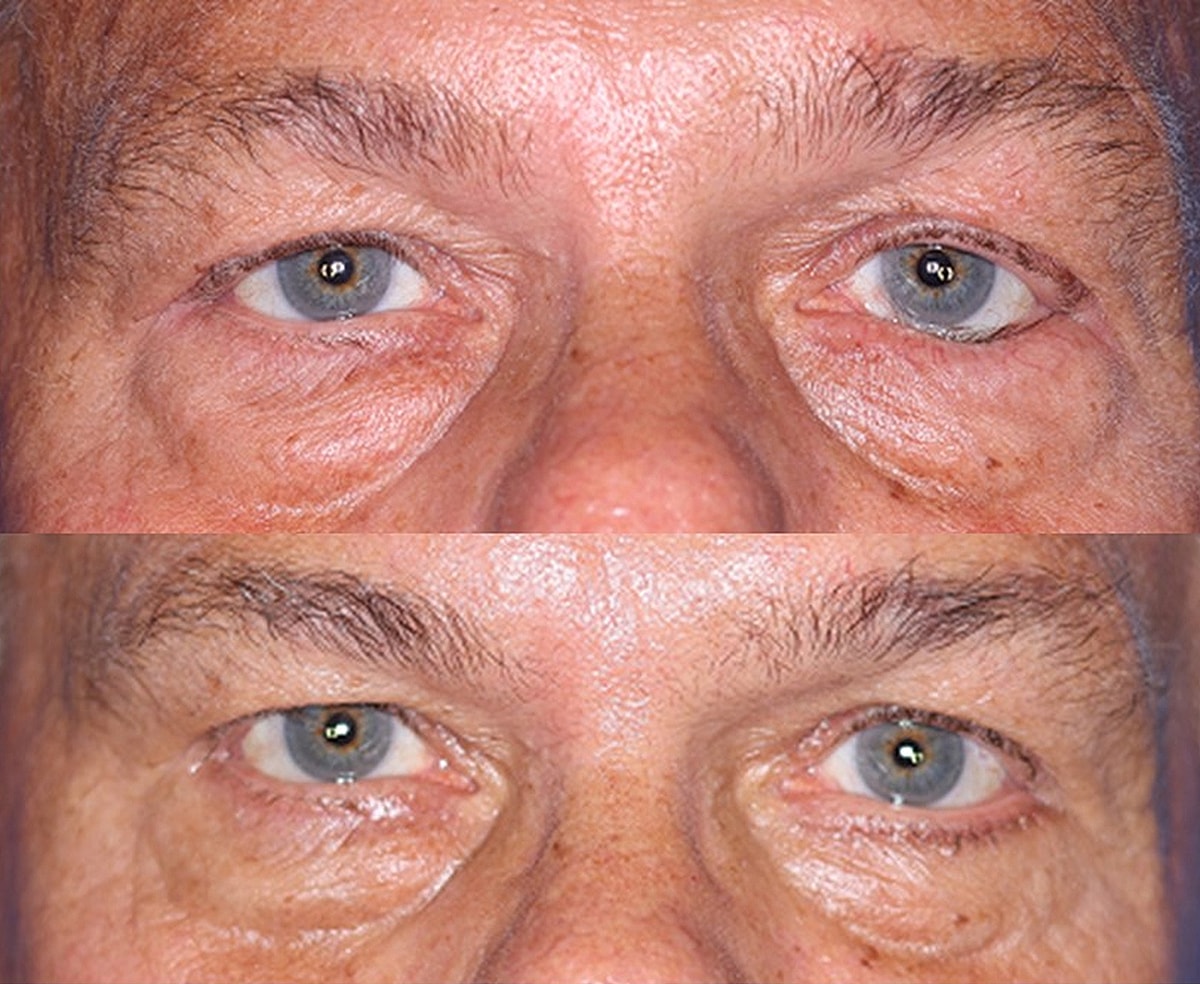
Blepharoplasty is an eyelid procedure that removes or repositions selected skin, fat, and muscle from the upper lids, lower lids, or both. An eyelid lift may improve hooding, bags beneath the eyes, uneven contours, and certain problems involving obstructed vision. The terms blepharoplasty, eyelid surgery, eyelid lift surgery, and cosmetic eyelid surgery all describe this general category of treatment. A surgical plan may focus on the upper eyelids, the lower eyelids, or both areas together.

Improves drooping lids, diminishes under-eye bags, removes redundant eyelid skin, and reveals more of the natural upper-eyelid crease.
May address the upper lids, lower lids, or both. Upper blepharoplasty focuses on hooding and redundant skin. Lower blepharoplasty treats loose skin, prominent fat pads, and puffiness below the eyes.
Often completed with local anesthesia and sedation. Depending on the technique, extent of surgery, and individual comfort needs, some procedures call for IV sedation or general anesthesia.
For many patients, the most visible bruising and swelling improve over approximately one to two weeks. Head elevation, prescribed eye drops, and temporary activity restrictions help protect early healing.
Produces enduring changes in eyelid contour, skin position, and the appearance of the upper face. The result continues to take shape as swelling recedes and incision lines mature during the months after surgery.
With blepharoplasty Glendale patients can address age-related laxity, displaced fat, and excess tissue around the eyes. Surgery is most useful when the concern comes from tissue position or quantity rather than skin color alone.
Dark circles deserve individual evaluation. Lower blepharoplasty may reduce shadows cast by puffiness, but it cannot reliably remove pigment or discoloration visible through thin skin.

Blepharoplasty may be performed on the upper eyelids, lower eyelids, or both sets of lids. Before recommending surgery, Dr. Warrington evaluates the brows, tear film, lid support, fat pads, and existing contours around the eyes.
Upper blepharoplasty removes selected excess skin, treats small fat pockets when needed, and relieves heaviness that conceals the eyelid crease. Careful upper-eyelid surgery can create a cleaner lid contour without giving the eyes an unfamiliar shape.
When redundant skin covers part of the upper or outer visual field, upper blepharoplasty may offer a functional improvement as well. Visual field testing or an evaluation by an eye doctor may be appropriate when eye health or insurance coverage is involved.
Lower blepharoplasty addresses bags, puffiness, and uneven contours related to loose skin or prominent fat pads. Access may be created through an incision close to the lower lashes or from inside the lower eyelid.
Depending on the anatomy, lower-eyelid fat may be reduced or repositioned. Dr. Warrington may also reinforce lower-lid support or tighten selected muscle tissue when doing so helps maintain the eye’s shape.
When aging affects both areas, upper- and lower-eyelid surgery can be performed during the same operation. Treating them together may produce better balance than separating the procedures when both the upper and lower lids contribute to the concern.

By refining the tissue responsible for heaviness, puffiness, or a persistently tired look, blepharoplasty can give the eyes a more refreshed frame. The objective is a cleaner eyelid contour that remains in proportion with the face.
Blepharoplasty may be appropriate for someone with excess eyelid skin, prominent fat, lid drooping, or lower-lid puffiness that can reasonably be improved through surgery. Suitable candidates are generally healthy, understand the recovery period, and have grounded expectations about what eyelid surgery can accomplish.
This distinction is an important part of Dr. Warrington’s consultation. A brow lift may make more sense when brow position is pushing tissue onto the lids. Lower-eyelid surgery may not be useful when the real issue involves pigment, skin quality, or a hollow better suited to another approach.
These preparations reflect standard eyelid-surgery guidance involving eye-health assessment, medication review, nicotine avoidance, and safe transportation after the procedure.

Blepharoplasty is performed as an outpatient operation using local anesthesia, IV sedation, or general anesthesia, depending on the surgical plan. Dr. Warrington assesses the upper and lower lids, brow position, and lower-lid support before selecting the appropriate technique.
Local anesthesia numbs the eyelid tissue. IV sedation or general anesthesia may be selected for combined procedures, patient comfort, or lower-eyelid work that is more involved.
Before making an incision, Dr. Warrington marks the planned treatment area while evaluating eyelid closure, symmetry, and the location of the natural crease.
During upper blepharoplasty, the incision follows the natural fold of the upper eyelid. Through that opening, Dr. Warrington can remove measured amounts of skin, refine muscle when appropriate, and treat small deposits of fat.
The lower-eyelid incision may be positioned directly beneath the lashes or inside the lid. An incision near the lashes provides access to loose skin. The inside-lid approach can treat prominent fat without creating an external skin incision.
Restraint matters in eyelid surgery. Removing excessive fat can leave the eye area hollow, while taking too much skin may produce tightness or make complete eye closure difficult.
Dr. Warrington uses fine sutures or another appropriate skin-closure method. When removable sutures are used, they may be taken out at an early postoperative visit.
Your aftercare plan will explain head-elevated rest, cold compresses, incision care, prescribed medications, eye drops, and follow-up appointments.
After blepharoplasty Glendale patients may notice pressure, swelling, tightness, or a gritty eye sensation. Sharp pain is not expected. Contact the office promptly if you develop severe pain or a change in vision.
Blepharoplasty recovery includes temporary dryness, swelling, bruising, incision care, and limits on workouts, makeup, and contact lens wear. Many patients feel comfortable being seen socially after about 10 to 14 days, although the eyelids continue settling for several months.
Expect visible bruising and swelling for roughly one to two weeks. Lower-eyelid bruising can extend onto the upper cheek, while the upper crease may initially appear unusually full. This stage can look awkward, but it is temporary. Dark sunglasses are often helpful.
With Dr. Warrington’s clearance, gentle walking may begin early. Avoid heavy lifting, bending, strenuous exercise, swimming, eye rubbing, and contact lenses until you are told they are safe. Rest with your head raised, and use cold compresses, prescribed ointment, and eye drops according to your instructions.
Fresh eyelid incisions need protection from the Arizona sun. Wear dark sunglasses outdoors, avoid touching the incision lines, and do not pull on the lids to inspect the result.
Contact the office if you experience sudden swelling, severe pain, bleeding, fever, or changes in vision.
Following a blepharoplasty early improvement begins to appear as bruising and swelling recede during the first 10 to 14 days. Several months are needed for the eyelid shape to settle and the incision lines to mature fully.
The early recovery period may appear more dramatic than anticipated. It does not predict an overcorrected final outcome.
Blepharoplasty produces long-term improvement. Upper-eyelid results may remain visible for many years. Lower blepharoplasty can also create an enduring change when bags are related to the amount or position of eyelid fat.
The aging process does not stop after surgery. Genetics, sun exposure, nicotine, skin quality, and broader facial aging all influence future eyelid changes. Skin care, Botox, filler, resurfacing, or a brow lift may help some patients maintain the surrounding area. Others may consider another surgical procedure years later.
Blepharoplasty incisions are planned for discreet locations. Upper-eyelid scars follow the natural crease. Depending on the lower-lid technique, the incision may sit just beneath the lashes or entirely inside the lid. New scars can appear pink or feel firm before gradually softening and fading. Careful placement, sun protection, and avoiding makeup, rubbing, or tension during early healing can support favorable scar maturation.
An invisible scar cannot be guaranteed. Dr. Warrington will explain incision care, when sunscreen can be used, and when it is appropriate to resume eye makeup.
The cost of eyelid surgery reflects the work required for the individual case. Upper blepharoplasty, lower blepharoplasty, and combined upper- and lower-eyelid surgery differ in operating time, anesthesia, facility requirements, and the tissues being treated.
A straightforward upper-eyelid lift is priced differently from lower-eyelid surgery that includes fat repositioning, skin refinement, and support work. Revision procedures may cost more because existing scar tissue changes the operation. Staging the upper and lower lids as separate surgeries can also affect the overall expense.
Warrington Facial Plastic Surgery does not quote a precise surgical fee over the phone. Pricing without examining the eyelid skin, brow position, fat pads, and lower-lid support would be speculative. At your consultation, Glendale facial plastic surgeon Dr. Warrington evaluates these structures and develops a surgical plan before the office provides a detailed estimate. Qualified patients may have access to CareCredit financing.
Blepharoplasty is designed for excess eyelid skin and prominent fat pads. Nonsurgical and adjacent surgical treatments can address other concerns around the eyes, but they cannot substitute for removing or repositioning tissue when surgery is needed.
Option | Best for | Limitations |
|---|---|---|
| Blepharoplasty | Excess skin, prominent fat pads, drooping lids, and lower-eyelid bags | Involves surgery, recovery time, and incision care |
| Brow lift | A low brow, forehead heaviness, or descent of the outer brow | Does not remove bags beneath the eyes |
| Botox | Crow’s feet and wrinkles created by muscle movement | Temporary and unable to remove excess tissue |
| Filler | Carefully selected hollows beneath the eyes | May make puffiness worse when used in the wrong patient |
| Skin resurfacing | Pigmentation, fine lines, and crepey skin texture | Cannot remove heavy skin or prominent fat pads |
When comparing plastic surgeons, a board-certified plastic surgeon, a cosmetic surgeon, or an oculoplastic surgeon, ask who will perform the operation, how the eyelids will be assessed, and how eye-surface safety is addressed. Credentials are important, and the provider-patient fit matters too. Mayo Clinic identifies plastic surgeons, ophthalmologists, and oculoplastic surgeons among the professionals patients may encounter when considering blepharoplasty.
When eyelid changes are part of broader facial aging, blepharoplasty may be combined with brow lift surgery, a facelift, neck lift, Botox, filler, or skin resurfacing. A coordinated plan can rejuvenate connected areas while keeping the eyes from looking overcorrected. Mayo Clinic likewise notes that eyelid surgery may be performed with a brow lift, facelift, or resurfacing treatment.
A brow lift may be useful when descended brow tissue contributes to upper-lid hooding. Facelift or neck-lift surgery may fit a plan that also needs to address sagging through the lower face and neck. After healing, Botox can soften crow’s feet. Filler may help carefully selected hollows, although it requires particular caution near the lower lids.
Dr. Warrington may advise completing treatments in stages instead of combining them. The plan should always prioritize safety.
Warrington Facial Plastic Surgery provides blepharoplasty in Glendale for patients seeking face-focused specialty care close to home. Dr. Stephanie Warrington is a board-certified ENT and fellowship-trained facial plastic surgeon whose practice concentrates on the face and neck. Her training informs an integrated approach to the eyelids, brow, cheeks, nose, and the expression they create together. Function remains central to that planning.
Eye closure, tear-film health, peripheral vision, lower-lid support, dryness, and existing contours can all change what constitutes the right surgical plan.
Dr. Warrington favors conservative tissue management. When excess skin causes the problem, she removes a measured amount. When taking fat could create hollowness, she may reposition it instead. The priorities are protecting eye shape and avoiding a pulled appearance.
For patients throughout Glendale and the surrounding West Valley, having the practice nearby also makes postoperative visits more convenient. Follow-up does not require repeated trips across the Valley. Dr. Warrington remains involved from the initial consultation through postoperative care, maintaining a consistent, provider-led experience.
Schedule a blepharoplasty consultation with Dr. Stephanie Warrington at Warrington Facial Plastic Surgery in Glendale, AZ. Call our office or request an appointment online to discuss upper-eyelid surgery, lower-eyelid surgery, or a combined eyelid procedure.
Yes. Blepharoplasty, cosmetic eyelid surgery, eyelid lift, and eyelid lift procedure are commonly used names for surgery performed on the upper eyelids, lower eyelids, or both.
Glendale blepharoplasty pricing varies according to whether the upper lids, lower lids, or both are treated, as well as the anesthesia, facility requirements, and amount of tissue correction involved. After examining your eyelids in Glendale, Dr. Warrington’s office provides a case-specific estimate.
It may help when redundant upper-eyelid skin physically blocks part of the visual field. Evaluation can involve photographs, visual field testing, and an insurance review. Dr. Warrington will clarify which elements of the treatment plan are functional and which are cosmetic.
Lower blepharoplasty may improve dark shadows created by prominent under-eye bags, but it does not correct every type of discoloration. When pigment, visible vessels, or thin skin is responsible, Dr. Warrington may discuss skin care, resurfacing, or a different treatment.
Yes. Many eyelid procedures can be completed with local anesthesia and sedation. General anesthesia or IV sedation may be more appropriate for combined surgery, extensive lower-eyelid work, or particular patient-comfort needs.
Patients are commonly instructed to elevate the head during the initial phase of recovery to help control swelling. Dr. Warrington will give you a specific timeline based on the procedure performed and how your eyelids are healing.
An eye doctor’s input can be helpful for patients with glaucoma, dry eye, thyroid eye disease, contact lens concerns, or vision obstruction. When an eye-health issue could affect surgical safety, Dr. Warrington may request an examination or medical clearance.